Why We Built Kosmonaut: What a Year at Haos Taught Us About Work
Before Kosmonaut, we worked for a startup from Haos in Terazije. A private office in Vračar — and a failed mandatory office policy — taught us why one bad address kills attendance, and why a FitPass for coworking made sense.
July 25, 2026 · Kosmonaut
Why We Built Kosmonaut: What a Year at Haos Taught Us About Work
Kosmonaut didn’t start with a pitch deck. It started with a desk in Terazije.
Before this platform existed, my colleagues and I were working for a startup from Haos — a community coworking space in the center of Belgrade. We stayed for about a year. Looking back, that year shaped how we think about work more than any “office strategy” ever did.
What Haos gave us
At Haos, we weren’t alone in a quiet private room. We worked next to other companies, founders, freelancers, and teams who showed up every day with something to build.
Someone new walked in almost every day. Conversations spilled into corridors and kitchen corners. Something interesting was always happening — a launch, a meeting, a random introduction that turned into a useful contact.
That environment did more than feel nice. Walk through the floor and you see people you don’t even know — heads down, laptops open, pushing through hard problems. Without anyone saying a word, the room raises the standard. You also get the quieter gifts: unplanned introductions, a rhythm that helps you start faster, and belonging without a culture deck. The space itself becomes the culture.
It wasn’t noisy chaos. It was alive. And that aliveness mattered more than we realized at the time.
Who actually showed up
Not everyone on the team came to Haos every day. Some people preferred working from home. Some didn’t like the commute. Different reasons, same result: the full team was rarely in the same place.
I came almost every day. I like having an office. I like a dedicated space for work — clear borders between work and personal life. My colleague Stevan came almost every day too, mostly because Haos was close to him.
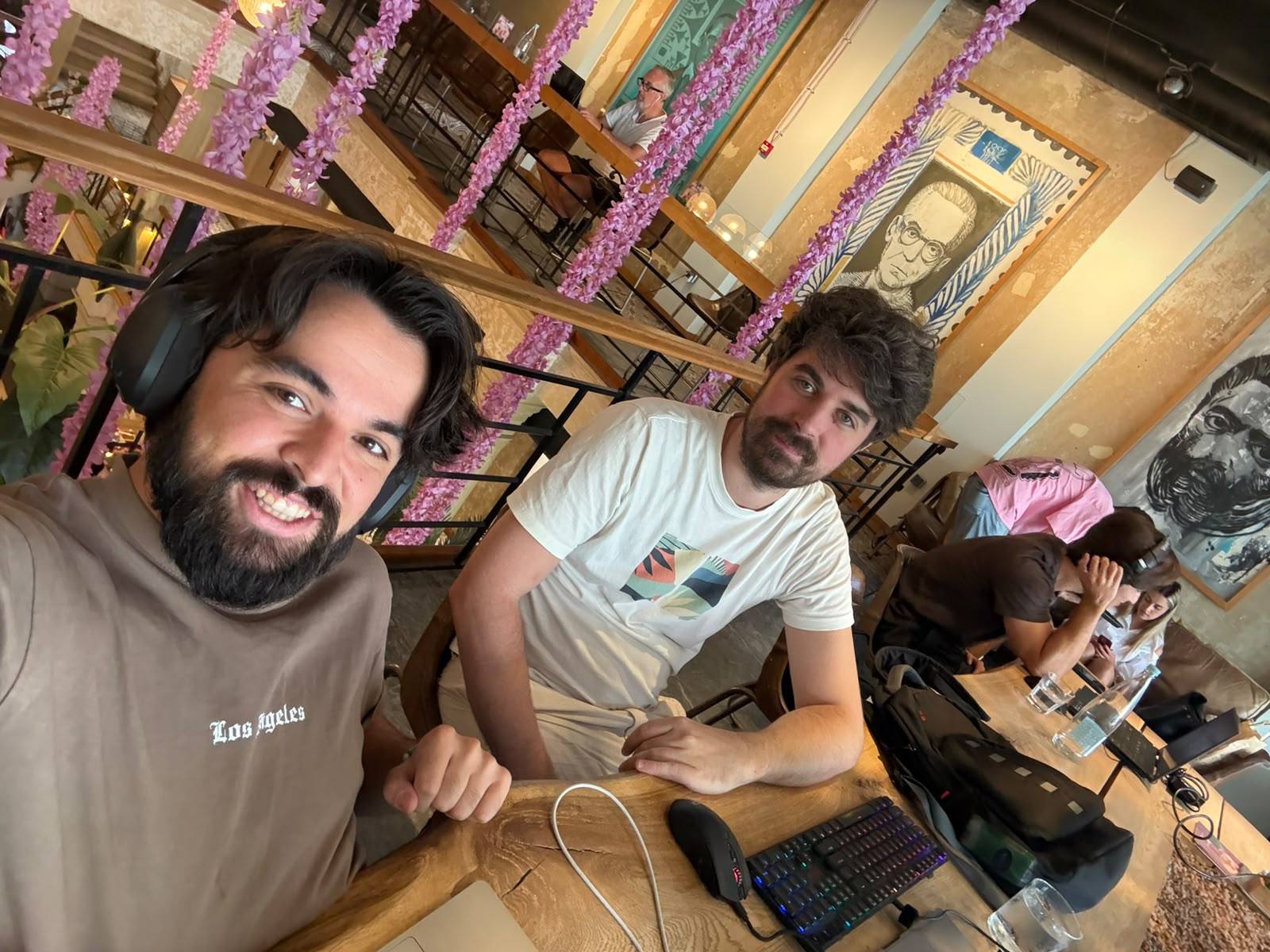
So the two of us spent almost every day together. We talked about the software, how to improve it, what to build next. That wasn’t a formal meeting culture. It was just being in the same room, day after day, next to people who were also building things.
Even when the rest of the team wasn’t there, we never felt alone. The space itself carried the energy. You were always part of a community — whether your whole company showed up or not.
Then the company got a private office
After about a year, the startup moved into a private office in Vračar, near Hram Svetog Save.
From where I sat, it felt like a level up. Control, quiet, a place that was just ours. More serious. More grown-up.
In reality, that was when things started to slide.
Not overnight. Quietly.
The location didn’t work for most of the team. It was crowded. Hard to reach. Almost no parking. Getting there became a friction people started avoiding — and once that happens, attendance drops fast.
For Stevan, the new address simply didn’t work. He couldn’t come as often. Then he stopped coming. Some days I was the only one in the office.
That is a very different feeling from coworking. At Haos, even if only part of the team showed up, the floor was still full of people. You still felt like you belonged somewhere. In the private office, when you came and spent the day alone, community disappeared. The space stopped holding you. It became a room with desks.
And that has consequences beyond productivity.
I had a lot of opportunities to change jobs. Sometimes the conditions were much better. Once I was offered a role that roughly doubled my salary at the time. I didn’t take it. Not because the work wasn’t interesting — because I couldn’t let my colleagues down. Except they weren’t really “colleagues” anymore. They were friends. People I had spent day after day with, talking about the product, building something together.
That’s the part no salary offer easily replaces: do you like the people you work with enough that walking away feels like leaving friends?
But what happens if the team barely sees each other?
When people stop sharing a workplace, belonging fades. Loyalty gets thinner. Leaving becomes easier — not because the work changed, but because the human connection that made the work matter quietly disappeared.
A closed door protects focus. It can also protect emptiness.
Mandatory office days didn’t fix it
We tried to force the problem away.
The company introduced mandatory office days. Show up. Be in the room. Rebuild the habit.
It failed miserably.
People waited for the morning meetings to pass, then headed home early. The policy got bodies into the building for a few hours. It did not get a team that wanted to be there.
That wasn’t the solution. You can’t policy your way out of a bad address.
The real problem wasn’t “private office”
Here’s the part that stuck with us.
Haos worked — at least for those of us who could reach it and liked being there. The private office failed largely because the address was wrong for most of the team. The lesson wasn’t that every fixed workplace fails. It was simpler and sharper: one bad address can kill attendance, and once people stop showing up, community collapses — whether you’re in a private office or a coworking space.
So a few of us who lived through that asked a different question:
Is it possible to keep the community of coworking and add real flexibility?
That question became Kosmonaut — something we built together.
The idea behind Kosmonaut
That friendship is what we want Kosmonaut to protect — and make more possible.
We want colleagues to become friends: people who actually share a room often enough that loyalty is real, not a slide in a culture deck. And we want to give them choice and flexibility at the same time — so belonging doesn’t depend on one address that only half the team can reach.
We wanted people to feel what worked at Haos — energy, belonging, the push of working around others — without forcing an entire team into one office that only fits half of them.
The answer looked a lot like something people already understood from fitness: FitPass, but for coworking.
A coworking pass. Access to many spaces. Choose where work actually works for you that day — closer to home, easier to reach, better for focus, better for meetings — while still being part of a wider working community.
Kosmonaut grew out of that belief:
Good workspaces shouldn’t be locked behind one address that only some of the team can happily reach.
People should be able to find spaces like Haos, visit them without friction, and keep the human side of work alive. Operators should be able to welcome those visitors cleanly. Teams should get friendship and flexibility — not one at the expense of the other.
We built Kosmonaut so that experience could travel: discover a space, understand what’s there, and actually go work.
If you’re choosing how your team works
A private office can still be the right move later. Sometimes you need quiet, privacy, or a permanent base. Mandatory office days can sound like discipline. They can also just become a morning meeting people endure before leaving.
But if you’re choosing a single workplace and hoping everyone will magically love it, ask harder questions:
- Will people actually come — or will the commute quietly win?
- Will they see each other enough to stay connected?
- Will this place make the team better — or just look more serious on paper?
- If you have to mandate attendance, is the place the problem?
Because the room you work in shapes more than your calendar. It shapes your pace, your network, your standards, and whether people feel they belong.
We learned that as colleagues at a startup — first at Haos in Terazije, then in an empty office in Vračar. If that story sounds familiar, browse spaces on Kosmonaut and see what a flexible coworking pass looks like in practice.